

☕ Capacity Is Back, Predictability Isn’t | Cargoccino 4.8.26
The supply chain network is moving again, but not in a way that feels stable. Vessel traffic is picking up in key corridors, rates are starting to move earlier than expected, and some of the most constrained lanes are loosening. Still, disruption is spreading across more parts of the system. Costs are rising in uneven ways, and supply chains are adjusting without a clear center of gravity.
The broader pattern is becoming harder to ignore: capacity is returning, but predictability is not following with it.
Top of the Cup: The network is active again, but no longer synchronized
Recent vessel movements through the Strait of Hormuz suggest that one of the most closely watched chokepoints is not shut down, but operating under tension. Ships are moving selectively, and with higher perceived risk. But as we know, supply chains do not require a full closure to feel disruption. When routes are technically open but operationally uncertain, carriers still have to make different decisions about routing, capacity deployment, and service reliability.
At the same time, rates are beginning to rise earlier than expected for this point in the year. In a typical cycle, soft demand would keep pricing subdued until later in the peak season buildup. Instead, carriers are already managing capacity and holding pricing discipline in response to risk.
These two signals together suggest a system that is active, but no longer synchronized. Freight is flowing, but not evenly. Capacity exists, but not necessarily where or when it is needed.
Source: Maritime News
Regulators are pushing back on how quickly costs can move
The Federal Maritime Commission has again rejected Maersk’s request to waive the standard notice period for an emergency fuel surcharge. The carrier argued that rapidly changing fuel conditions required faster implementation, but the FMC maintained that existing rules still apply.
This creates a tension that is becoming more visible across the market. Costs (especially fuel) are changing quickly, but the mechanisms to pass those costs through are not always keeping pace. Carriers may look for alternative ways to recover it, whether through different surcharges, adjusted rates, or network decisions.
Why it matters: when cost changes outpace pricing mechanisms, transparency tends to decline. Charges become less standardized, harder to track, and more difficult to reconcile against contracts.
Source: JOC
UPS is redesigning its network; and the workforce with it
UPS is expanding its use of AI across operations while investing in employee upskilling to support a more automated and flexible network. Their focus is on adapting how work gets done as routing, planning, and execution become more data-driven.
As networks become less predictable, companies are relying more on technology to make real-time decisions, and on workers who can operate within that environment.
The change is not limited to tools. It's altering how networks are structured, how decisions are made, and what roles are needed to support them.
Why it matters: the response to volatility is not more capacity or different routing. UPS sees a gradual redesign of the operating model itself, where automation and adaptability become central to maintaining control.
Source: Supply Chain Dive
The operational side: cost pressure is harder to track than it is to see
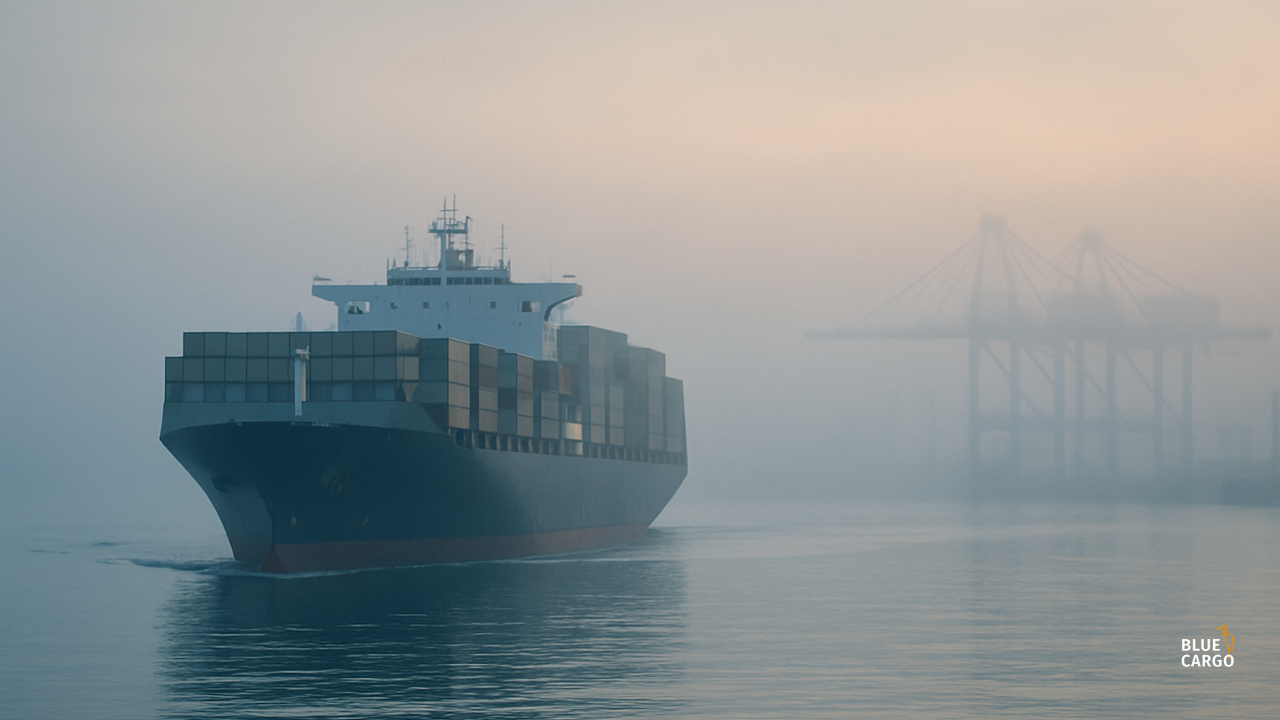
Costs are entering the system in several fragmented ways; fuel surcharges, emergency fees, and indirect pricing adjustments are on the rise rather than just clean rate changes.
Why it matters: cost visibility is declining just as volatility increases; this could create unexpected charges for shippers without strong operational foundations.
Source: NY Post
☕ What’s brewing at BlueCargo? ☕

Webinar: The Contract-to-Cash Playbook: Reducing Freight Cost Leakage
In case you missed it, the video recording of our webinar is live on the AAFA website.
If you're interested in running through the Contract to Cash Playbook yourself to discover hidden profit leakage, contact Kawas.
☕︎☕︎☕︎☕︎☕︎☕︎☕︎☕︎☕︎


