

☕ Freight Is Spreading Out | Cargoccino 3.25.26
Freshly brewed supply chain news by BlueCargo
The pressure on supply chains this week is coming from several directions at once. Trade policy is still unsettled, storage demand is rising, some brands are pulling back on air freight, tariff refunds remain slow to materialize, and the situation around Iran has brought fuel risk back into the conversation. At the same time, the longer arc is still visible beneath the week’s headlines: cargo is flowing through a broader mix of gateways, and inland transportation is adjusting along with it.
Top of the Cup: West Coast share declines and intermodal moves with it, but less tightly
The long move away from a West Coast-heavy import model has not changed course. Over the past sixteen years, the share of imports entering through the US and Western Canada on the West Coast fell from roughly 59% in 2010 to below 49% in 2025. Intermodal share has also trended downward over that period, which makes sense. Freight routed through the East Coast, Gulf Coast, or other entry points often travels shorter inland distances, and shorter hauls are less favorable to rail.
What is more interesting now is the timing gap between the two. For years, West Coast share and intermodal share tracked closely. Since mid-2022, that connection has loosened. Intermodal recovered for a period before West Coast share did, then softened again even while West Coast volumes improved. More recently, West Coast share has come under pressure again, while intermodal has shown some lift.

That does not mean the underlying relationship is gone. It does suggest that congestion, route reshuffling, and geopolitical disruption are interfering with the usual logic and changing how quickly each part of the system responds. If tensions around Iran keep more attention on the trans-Pacific and limit appetite for risk elsewhere, the West Coast may get a near-term boost. That would help intermodal for a while, even if the broader diversification of port strategy remains in place.
Source: JOC
Storage is taking a larger role
Trailer storage is becoming a more visible part of how companies manage uncertainty. FreightWaves reports that demand is rising as tariff pressure, nearshoring, and tighter warehouse conditions push companies to hold goods in motion for longer than they once did.
That reflects a broader reality. When importers are unsure how policy will shift, they are more likely to stretch inventory decisions. When supply chains become more regional, freight tends to touch more intermediate points. When warehouse space is tight or expensive, trailer yards start absorbing the overflow. None of that is especially dramatic on its own, but taken together, it changes how freight sits in the system.
Trailer storage used to read more clearly as overflow during a surge. Now it looks more like an everyday release valve, one that gives companies flexibility but also creates a quieter layer of cost and complexity.
Why it matters: Each extra pause adds expense, ties up equipment, and makes inventory harder to track with confidence. Freight does not have to deviate far from plan for those costs to start accumulating.
Source: FreightWaves
Hugo Boss cuts air freight as cost discipline sharpens

Hugo Boss is reducing its use of air freight in search of lower costs and lower emissions, a decision that says quite a bit about where shipper priorities are landing right now. The company is not alone. Across sectors, there is a renewed focus on planning inventory more effectively rather than paying to rescue it later.
That shift matters because air freight often reflects the health of the rest of the supply chain. When companies lean heavily on it, they are usually compensating for something else: poor visibility, unstable lead times, weak forecasting, or pressure to protect availability at any cost. Pulling back on air suggests a greater willingness to manage trade-offs more deliberately, even when that means accepting longer transit times.
For retailers and consumer brands in particular, this is another sign that transportation is being treated less as a service decision and more as a margin decision.
Source: Supply Chain Dive
The operational side: CBP refunds are moving, but the money is not back yet

For importers watching the tariff refund process closely, the latest news offers progress without much speed. CBP continues to move through staged testing, including the mechanics needed for consolidation and larger-scale processing. A separate Court of International Trade order has also started to clear away certain tariffs on non-liquidated entries.
That is meaningful, but it is not the same thing as relief arriving in the bank account. The administrative process still needs to catch up, and anyone expecting quick reimbursement is likely to be disappointed.
This is where operational discipline matters more than headlines. Refund eligibility is one thing. Proving amounts, matching entries, validating invoices, and maintaining clean records over time is another. The companies best positioned here will be the ones that already know exactly what was charged, what was paid, and which entries remain exposed.
Why it matters: a delayed refund still leaves a cash burden sitting on the importer’s books. In a year like this one, that gap is not a side issue. It is part of cost control.
Source: Supply Chain Dive
Outside the ports: Iran tensions put fuel risk back on the table
The past few days have also pushed energy back into the freight conversation. Associated Press reported that the conflict involving Iran and uncertainty around the Strait of Hormuz sent oil prices sharply higher before easing somewhat on March 23. Vessel traffic has continued, but under conditions that remain fragile.
That matters well beyond the energy market itself. Supply chains do not need a full shutdown or a dramatic closure to feel the consequences. Uncertainty alone can raise costs, feed carrier caution, and alter assumptions that had started to feel settled.
For transport budgets, that is enough. Fuel works its way into bunker costs, linehaul pricing, and carrier surcharges quickly, especially when markets become jumpy.
Source: AP News
☕ What’s brewing at BlueCargo? ☕
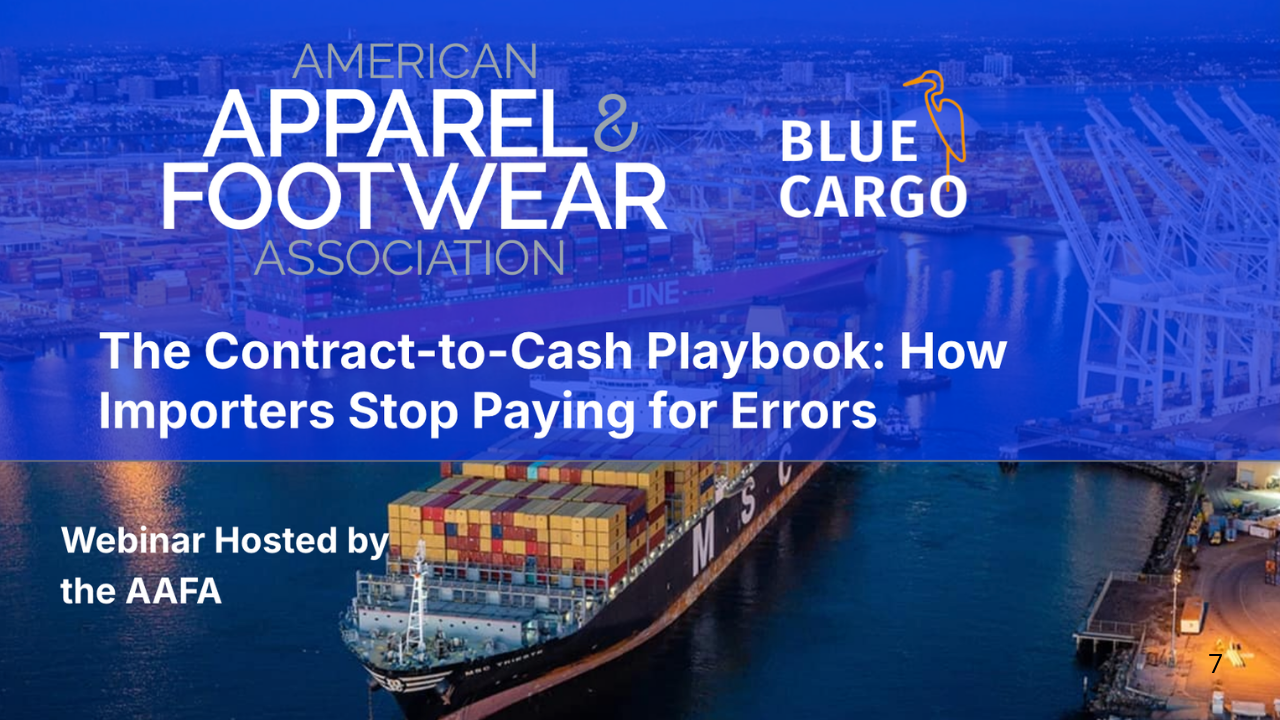
When freight touches more locations, the bill becomes harder to read clearly.
That is usually where leakage begins, not with one dramatic mistake, but with small mismatches that sit unnoticed across hundreds of shipments.
If you have missed our TPM26 panel, register today for a Webinar hosted by the AAFA:
Webinar: The Contract-to-Cash Playbook: Reducing Freight Cost Leakage
Wednesday, April 1, 2026 2:00 PM ET to 3:00 PM ET | Online
Attendees of this webinar will learn:
- To identify where contract-to-cash breakdowns occur in international freight operations.
- Practical approaches to managing detention, demurrage, and accessorial costs.
- How cross-functional alignment improves cost control and vendor accountability.
- A practical framework for identifying where cost leakage occurs to prioritize process improvements.
For any question, contact Aurelie.
☕︎☕︎☕︎☕︎☕︎☕︎☕︎☕︎☕︎


