
The Margin Levers That Sit Between Booking and Payment in Shipping
As teams begin 2026 planning, many are reassessing the 2025 contract season as more than a past cycle. Tariff volatility shortened decision windows, pushed shippers into earlier commitments, and tested whether freight cost assumptions could hold up once cargo actually moved.
In mid-2025, container imports surged as shippers accelerated volumes ahead of anticipated policy shifts, particularly across East and Gulf Coast gateways. By year-end, volume forecasts had softened, reflecting demand normalization and more cautious procurement planning.¹ That sequence revealed something important: even when transportation networks remain unchanged, freight cost outcomes can diverge materially from expectations. The cause is rarely rate levels or contract language, but rather the operational reality that unfolds between booking confirmation and invoice payment.
This execution interval has become one of the most influential margin control points in the international supply chain.
Execution Is Where Contracts Are Tested
Why predictable networks still produce unpredictable cost outcomes
Each year, freight contracts are negotiated with rigor. Rate cards, free-time provisions, and accessorial terms are structured to reflect detailed commercial alignment between shippers and service providers. In practice, contract performance is determined by execution conditions.
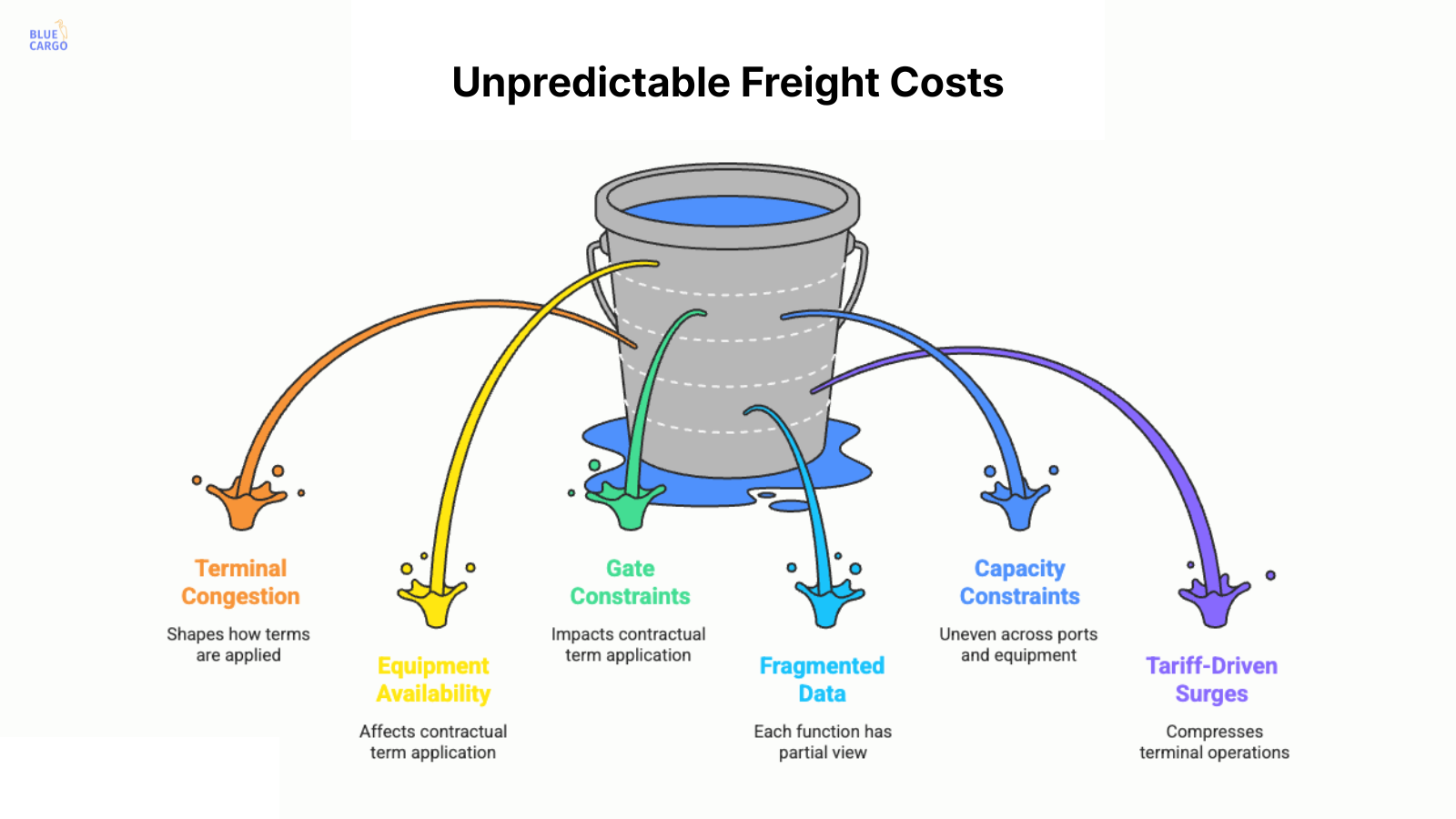
Terminal congestion, equipment availability, and gate constraints routinely shape how contractual terms are applied. Detention, demurrage, and storage charges arise from these conditions and accumulate incrementally, often outside the immediate line of sight of procurement and finance teams. Operations teams manage these realities daily. Finance encounters their impact later, embedded in invoice line items. Procurement intervenes episodically through disputes or renegotiations. When execution data remains fragmented, each function operates with a partial view of the same cost drivers.
This pattern holds even in mature transportation networks.
Many shippers rely on established carriers, stable lanes, and consistent volume profiles, yet freight spend continues to exceed plan. Over the past year, global congestion indicators moderated compared to earlier periods, but capacity constraints remained uneven across ports and equipment pools, while pricing signals continued to fluctuate across major ocean trades.³ Tariff-driven booking surges further compressed terminal operations, increasing dwell exposure and amplifying accessorial costs.¹
Under these conditions, execution discipline becomes a primary margin lever. Small delays carry financial consequences once free-time thresholds are crossed. Equipment utilization extends beyond contractual assumptions. Charges triggered at the terminal level flow quickly into financial systems with limited advance notice. Without execution visibility, these outcomes register as volatility.
With visibility, they form patterns that can be addressed deliberately.
The Limits of Post-Payment Control
Freight audit remains a critical control within the contract-to-cash process, serving as the last line of defense against billing errors and misapplied tariff rules. It ensures accuracy after charges are issued, protecting organizations from paying what they do not owe.
Its limitation is structural, as most freight audits enter the process only after operational decisions have already determined cost outcomes. When an invoice is reviewed, dwell time has accrued, equipment has been held, and service trade-offs have already taken place. The financial impact is fixed.
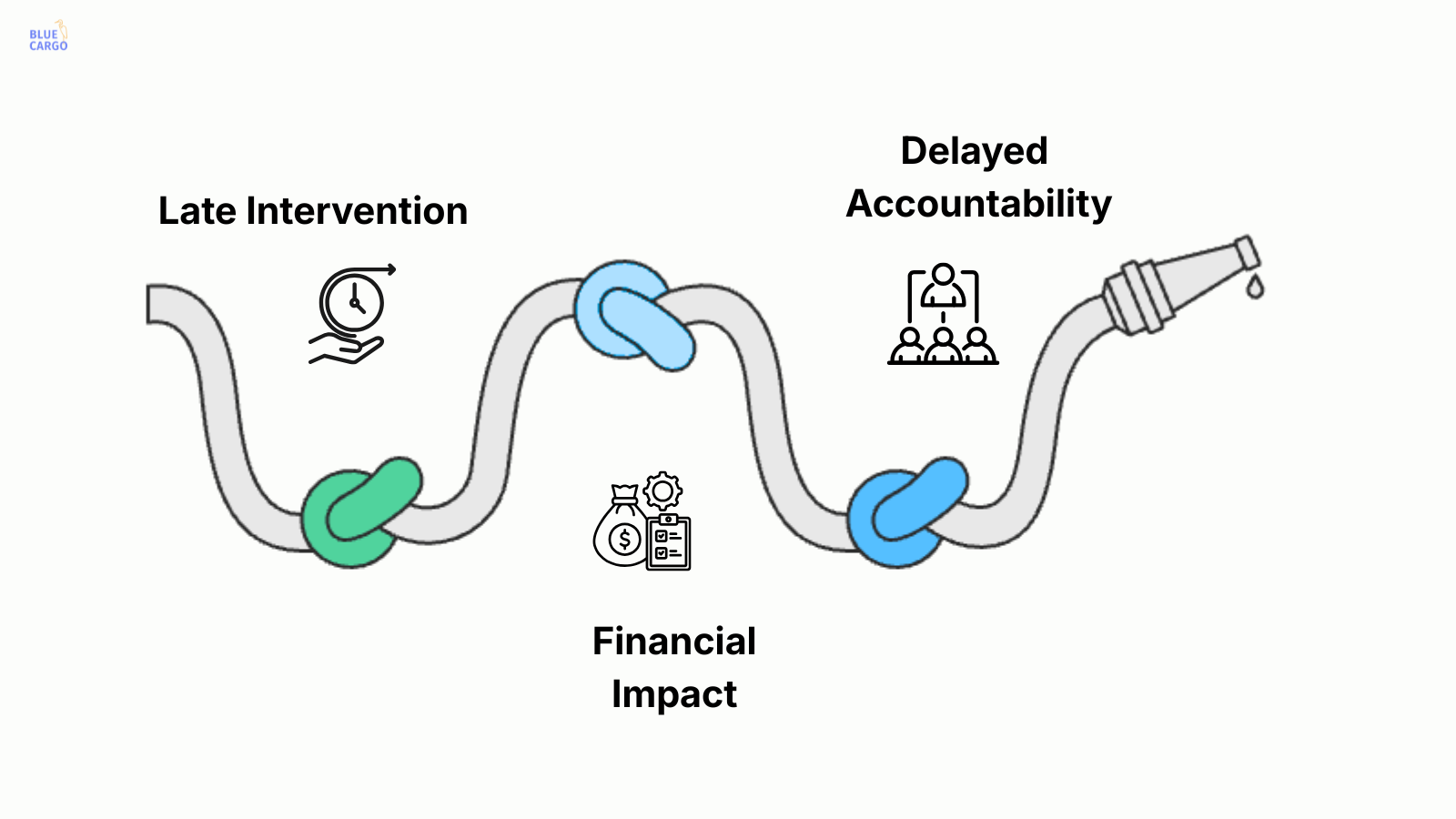
For this reason, top shippers are extending control upstream, introducing execution-level oversight that sits before audit and before payment. By monitoring container events, free-time usage, and accessorial triggers as they occur, teams can influence outcomes rather than simply validate them after the fact. Platforms such as BlueCargo enable this shift by aligning execution data with contract terms in real time.
Companies that rely solely on post-payment controls accept a delay between operational cause and financial effect. Those that add pre-audit execution visibility restore accountability and reposition cost management as governance rather than reconciliation.
That is where BlueCargo becomes the partner of choice.
A Conversation Worth Having at TPM26
Execution transparency requires a unified layer that reconciles shipment events, contractual logic, and financial exposure into a single operational truth.
Platforms like BlueCargo consolidate container-level execution data and align it with contract terms and invoice data, enabling companies to identify cost drivers earlier, prioritize corrective action, and reinforce accountability across functions.
At TPM26, the Contract-to-Cash Playbook session brings together shippers actively applying these principles.
We're scheduling private conversations at TPM26 with operations, procurement, and finance leaders.
Book a meeting today to discuss how execution governance can work within your specific network and planning horizon.
---------
Sources and References
- Descartes Global Shipping Report, July 2025. U.S. container import trends and tariff-driven frontloading.
- https://www.descartes.com/resources/knowledge-center/global-shipping-report-July-2025-US-imports-near-record-high
- Southern Star Navigation. Demurrage and detention cost drivers and operational dynamics, 2025.
- https://southernstarnavigation.com/demurrage-and-detention-2025-guide
- C.H. Robinson. Ocean freight market update and capacity conditions, 2025.
- https://www.chrobinson.com/en-us/resources/insights-and-advisories/north-america-freight-insights/sep-2025-freight-market-update/ocean
- Tradlinx. Execution visibility and detention and demurrage negotiation strategies.
- https://blogs.tradlinx.com/demurrage-and-detention-in-2026-how-to-use-visibility-data-in-your-tariff-negotiations
- TPM26 Program. The Contract-to-Cash Playbook: How Leading Importers Unlock Profits Trapped in Their Supply Chain.
- https://tpm.joc.com/en/program/the-contracttocash-playbook-how-leading-importers-unlock-profits-trapped-in-their-supply-chain-1067-50118


